

Quick self-audit. Open your last download from your current DJ pool. The folder from this Tuesday or Wednesday — the one with 40 to 500 tracks in it. Now, honestly: how many of those would you actually play this Friday at the gig?
If the answer is "maybe four", you already know what's wrong with most DJ pools. The volume isn't the value. The hit rate is.
That's the whole question this article answers — what makes the best DJ pool records for banger music in 2026, where "banger music" means open-format, high-energy, floor-tested tracks you actually queue at peak time. Not the listicle of every pool that exists, ranked by who pays the affiliate fee. The decision framework for the one you'll keep paying for, and how to spot the failure modes the SERP-pleasing best-of guides keep glossing over.
The DJ pool model itself is fine. It's a shared subscription library with a long, well-documented history — promo-record service for working DJs, modernized with cloud delivery and DJ-software-ready tagging. The model is not the problem. Generic curation is.
Why generic pools fail (and you've felt it on the floor)
Three reasons the universal-pool model collapses for working DJs.
1. The trending algorithm doesn't know your floor. Most pools rank tracks by aggregate downloads and platform streams. A track that's blowing up on TikTok at 11 AM doesn't necessarily land at 1:47 AM in a packed wedding reception. The algorithm sees "trending"; you see "the bride's cousin asked for it three songs ago, the floor is half-empty, and you need a track that resolves the energy you've been building for 20 minutes." Different problems, same shelf.
2. Edits without intention. A generic pool ships 500 edits a week. Most of them are reflex products: every new release gets a clean version, a quick mix, an extended intro, a short edit, an instrumental. Five derivatives per track, regardless of whether the original is even gig-relevant. You're paying for the storage; you're not paying for the curation. The result is the 500-tracks-week, 40-playable folder you just opened.
3. No energy filter. Open the catalog of any all-genre pool and you'll see ambient, downtempo, acoustic covers, lounge, deep house, hard techno, trap ballads, country crossover — all in the same library. That's fine for a multi-format DJ doing dinner-then-dancefloor. It's noise for a working DJ whose gig is high-energy, peak-time, cross-genre banger sets. You don't need a folder of 30,000 tracks; you need the 200 that actually drop.
The math is brutal. 500 tracks per week × 4 weeks = 2,000 tracks/month from a generic pool. Working DJs report ~10% playable on first listen, ~5% actually queued in a real set. So you're paying for 2,000 to get 100. The pool is doing 5% of its job.
Volume isn't value. The hit rate is.
What "banger music" actually means
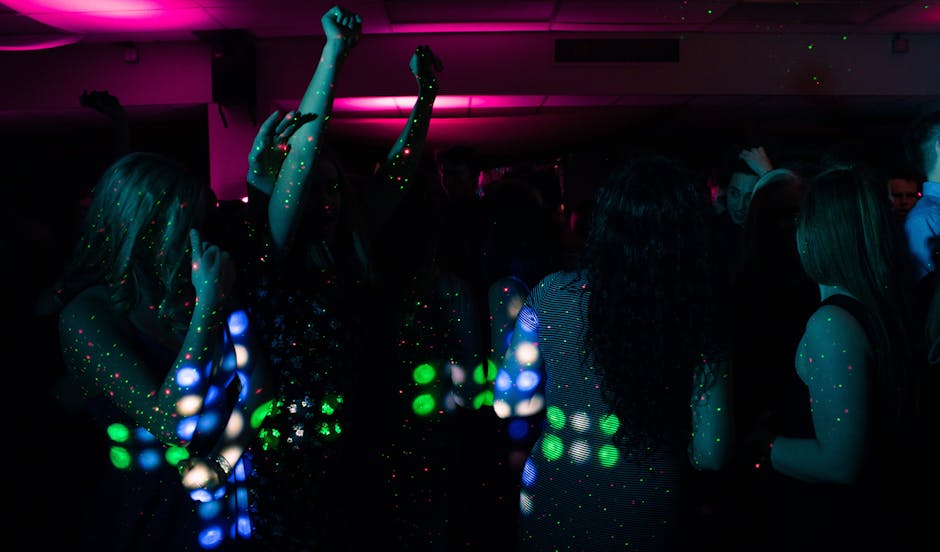
The phrase gets used loosely. Concretely, banger music is cross-genre, high-energy, floor-tested, peak-time — defined more by what it does to a room than by genre tags.
By BPM range: most banger sets live between 100 and 140 BPM, with strategic excursions into 70–105 for hip-hop drops and reggaeton breaks, or up to 160+ for half-time drum & bass moments. The trick isn't the BPM count; it's the transitions between them.
By energy curve: a banger set isn't flatline peak time for two hours — that fatigues a floor. The real shape is a slow build, a first peak around the 30-minute mark, a controlled ebb at 45, a second sustained peak from 60 to 90, then a hard reset for the closing 15. A good DJ pool gives you tracks that fit each phase, not just the peak.
By genre coverage: hip-hop, R&B, reggaeton, afrobeats, dancehall, moombahton, dembow, tech house, bass house, trap, top 40 crossover, throwbacks. 48+ genres in one set is common. This is why "best for hip-hop DJs" or "best for EDM" lists miss the point — the working open-format DJ moves between scenes in a single hour.
By transition logic: banger sets live or die on the seam between two genres at similar energies. Tech house at 124 BPM into a hip-hop edit at 124 half-time. Reggaeton at 96 into a moombahton edit at 108. Pre-tagged BPM and key points are non-negotiable, and the edits have to be built for the seam — clean intros, clean outros, no awkward stems.
That's what you're picking a pool for. Not catalog size. Seam-ready edits at the right BPMs, at peak energy.
How do you evaluate a DJ pool for banger music?
Use this five-criteria framework next time you're staring at a free trial. Most pools fail at least two of these.
1. Human curation over algorithmic dump. If the pool's "weekly top picks" looks like a Spotify chart export, it's a chart export. The signal you want: a curator who DJs themselves, who'll skip a TikTok smash because it doesn't blend, and who'll champion a sleeper edit that lands at 2 AM. Algorithms see streams; humans see the room.
2. File format and quality. The working standard is 320kbps MP3 — every modern DJ pool ships this. Some upmarket pools advertise WAV/AIFF; for club playout, the difference is rarely audible past the third drink, but if you're playing high-end listening rooms or recording for broadcast, lossless matters. For peak-time bangers, prioritize files with clean tags (BPM, key, energy) over format. Bad metadata costs you more time than codec quality.
3. Refresh rate that matches your gig calendar. Daily updates are noise if you only DJ Friday and Saturday. Weekly drops on Wednesday or Thursday are the sweet spot — enough lead time to test a few candidates Friday afternoon, enough freshness to not repeat last weekend's set. Pools that haven't updated their core catalog since 2019 ship "fresh" promos that are reissues of reissues. Check the actual release dates, not the "added" date.
4. Exclusives that actually exist. Every pool claims exclusives. Most are pre-release windows of 2–4 weeks before a track lands on Spotify, after which the "exclusive" advantage evaporates. Real exclusives are commissioned edits, label remixes, and DJ-specific versions (clean, instrumental, slam edit, transition tools) you genuinely can't find elsewhere. Bangerz Army's 100,000+ exclusive edits and remixes are this category — they're library, not lead-time.
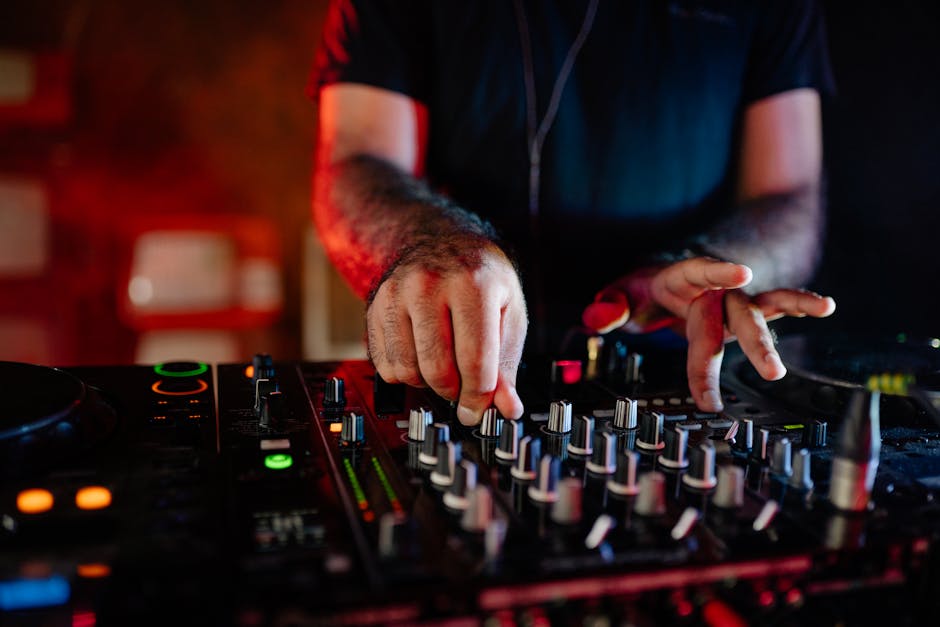
5. Edits that work on the floor, not in the preview. This is the one most reviewers miss. A track sounds great on its own at home; the question is whether it blends, whether the intro lets you ride 16 bars before the vocal, whether the outro gives you space to phase the next track in. Test the pool's edits at gig volume on real DJ gear. The ones built by working DJs land; the ones built by interns to fill a quota don't. Industry coverage tracking the rise of edit culture in DJ Mag and similar publications has been clear on this trend for years: working DJs increasingly source 70–80% of their working library from edits, not original releases.
If your current pool fails three of five, you're paying for storage, not strategy. Two of five is where a free trial becomes a cancellation. One of five — depending on which one — might still be worth keeping.
When does a generalist pool still beat a niche pool?
Not every DJ should optimize for banger music. Here's when the universal pool genuinely beats the niche pool.
If you're early-career. You don't yet know what scene fits you. A 30,000-track all-genre catalog is a sandbox: try a tech house warm-up, swap in some R&B, see what your ear keeps. You're learning, not dropping. Generic > niche while the taste is forming.
If you're a true multi-format DJ playing wedding-then-corporate-then-club in one week. The Sunday brunch acoustic set, the corporate dinner Tuesday, the club residency Friday — three different libraries, three different BPM ranges. A niche banger pool optimizes for Friday and shrugs at the other two. A generalist covers all three at decent depth.
If your scene is genuinely a single sub-genre. A pure techno DJ who plays warehouse-only sets has different needs than an open-format wedding DJ. A specialist pool for that single sub-genre (Beatport for beat-pure techno purchases, Bandcamp for label-loyalty digs) often beats both generalist and "banger" approaches.
The rule: pick the pool that maps to your gig calendar, not to a content marketer's "best of" list. If 80% of your bookings are high-energy peak-time open format, a banger-curated pool wins. If 80% are anything else, a generalist wins. The middle is where free trials are useful.
Frequently asked questions
How much does a DJ pool cost in 2026?
Mainstream subscription pools sit between $25 and $70 per month. BPM Supreme runs $24.99 Standard and $34.99 Premium; DJcity is $34.99 monthly with a $10 intro for new users. Bangerz Army is €7.99 first month with code START2026, then €24.99/month — cancel anytime. Per-track stores like Beatport land between $1.69 and $2.49 per track, which only makes sense if you buy fewer than 10 tracks a month.
Is a DJ pool worth it for working DJs?
Yes — if you play more than two paid gigs a month and you'd otherwise be assembling sets from a mix of YouTube rips, label promos, and friend-shared crates. The pool replaces that fragmented sourcing with one curated library. Below two gigs a month, the math gets shaky and a per-track store can win. Above five gigs a month, the question stops being "is it worth it" and becomes "which one fits my scene".
Can I cancel a DJ pool subscription anytime?
Most reputable pools — Bangerz Army, BPM Supreme, DJcity, Beatport Streaming — let you cancel from your account in one click, no calls, no retention scripts. You keep access until the end of the billing period. A pool that hides the cancel button or requires email-only cancellation is a flag worth noting.
Is the music in a DJ pool legal to play at gigs?
Yes for licensed pools. The pool pays the labels and rights-holders, you get a download licence for personal performance. The licence does NOT cover broadcast or commercial recording without separate clearance — read the terms. If a pool's pricing seems too good to be true (free / sub-$10/month with full catalogue), check the licence carefully — you might be downloading promo-tier files without performance rights.
What's the difference between a DJ pool and a per-track store like Beatport?
Pools are subscriptions: pay monthly, download as much as your gig calendar demands. Per-track stores charge per file (Beatport at $1.69–$2.49 per track typically). The break-even is around 10–12 tracks per month — under that, per-track wins; over that, the pool wins by a wide margin. Working DJs who play 4+ gigs a month easily download 50–100 tracks per month, so the pool model dominates. Per-track is for niche-genre purists, label-loyalty digs, or archival builds.
More for working DJs on the Bangerz Army blog, or see what we built and why. For label/artist info, head to /for-labels/. Or start with the crates: how to build a DJ music library that performs at every gig.
Image credits. All photos via Pexels under the Pexels free-to-use licence. Hero: Yan Krukau. Inline 1: Trinity Kubassek. Inline 2: Yan Krukau. Inline 3: cottonbro studio.